
Flooring has a bigger impact on a finished basement than many homeowners expect. It affects comfort, durability, moisture performance, maintenance, and how connected the basement feels to the rest of the home.
In Pennsylvania basements, flooring choice matters even more because below-grade spaces come with a different set of conditions than upper floors. Humidity, seasonal moisture variation, slab temperature, and the general realities of below-grade construction mean basement flooring has to do more than look good. It needs to hold up over time. That is why the best flooring for a finished basement balances appearance with realistic performance.
A good flooring choice should fit the way the space will be used. A family room has different needs than a home gym, a guest suite, or a kids’ play area. The right answer is not always the same from one basement to the next.
What is the best flooring for a basement in Pennsylvania?
For many Pennsylvania basements, luxury vinyl plank is one of the best flooring options because it is durable, attractive, and better suited to below-grade moisture conditions than many traditional materials.
That said, it is not the only option.
The best basement flooring depends on the space, the household, and whether moisture conditions have been addressed correctly first.
What makes basement flooring different from upstairs flooring?
Basements are more moisture-sensitive
Even in a basement that has never flooded, humidity and minor moisture movement can affect flooring performance. Materials that work well upstairs do not always perform the same way below grade.
Slab temperature affects comfort
Basement floors tend to feel cooler, so comfort underfoot matters more than many homeowners expect.
Use matters more in a basement
Flooring in a basement often has to support entertaining, workouts, kids’ play, guests, storage, or all of those at once.
Top basement flooring options
Luxury vinyl plank
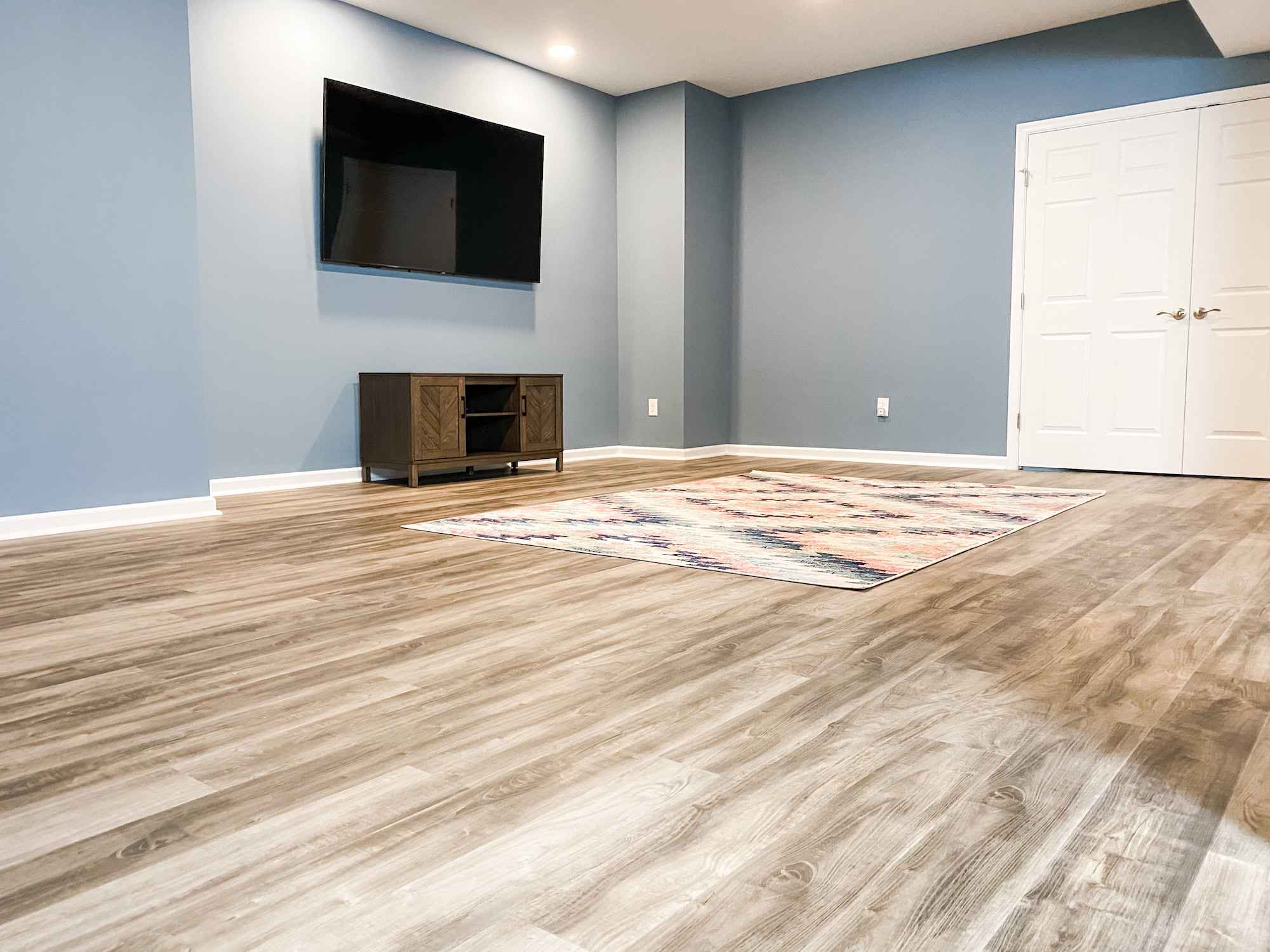
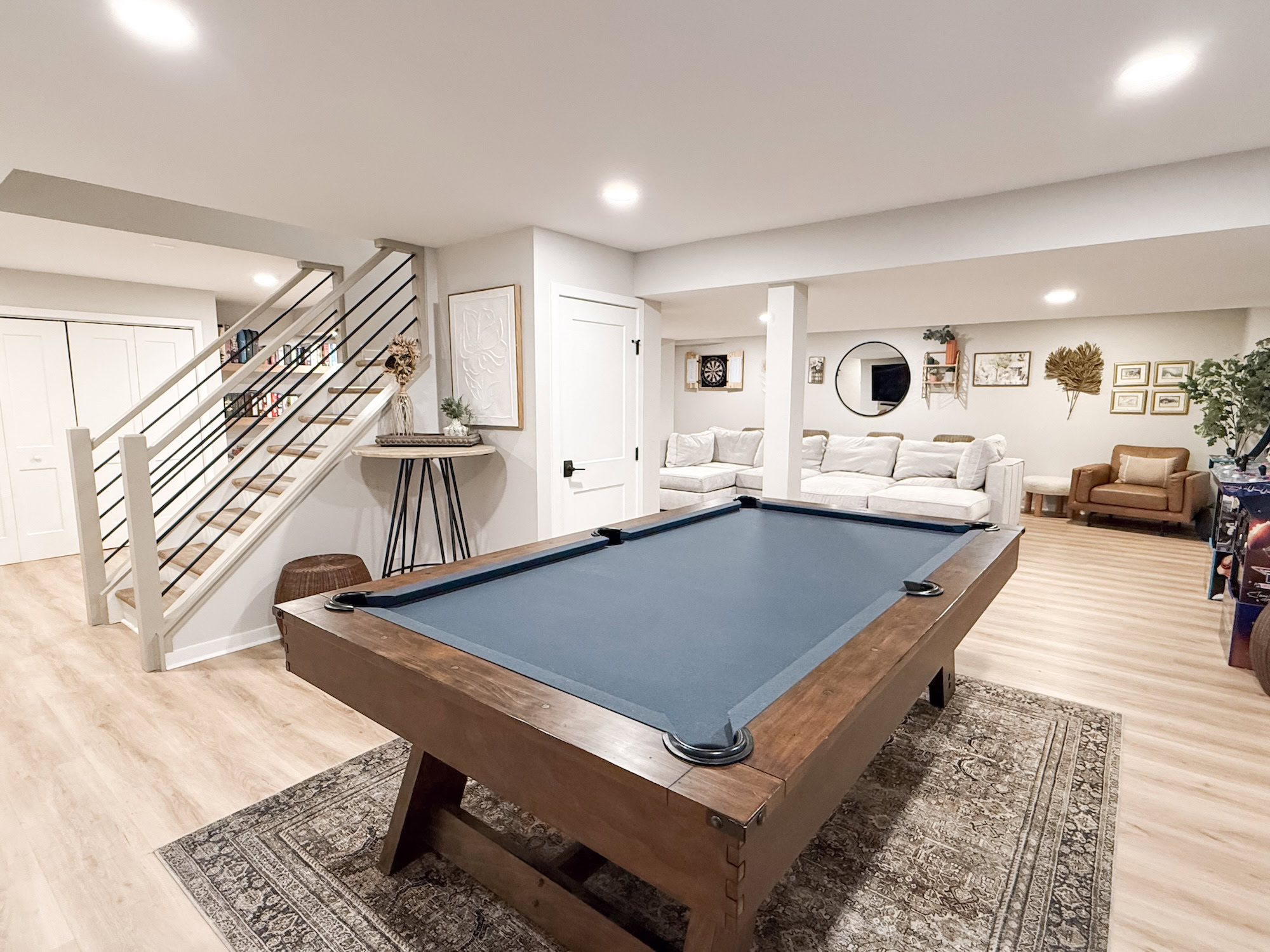
Luxury vinyl plank is one of the most practical and popular choices for finished basements. It handles daily wear well, offers a wide range of design styles, and is generally a better match for below-grade environments than traditional hardwood. It also works well across open-concept layouts because it creates a clean, continuous surface that helps the basement feel larger and more finished. LVP is considered a moisture-conscious flooring choice in basement remodeling because it helps balance durability and design.
Carpet in selected areas
Carpet can add warmth and comfort in media rooms, play areas, or guest zones, but it is usually best used selectively and only when the basement has been properly evaluated for moisture. Some homeowners prefer carpet tiles or area rugs over hard flooring rather than wall-to-wall carpet throughout the basement.
Tile
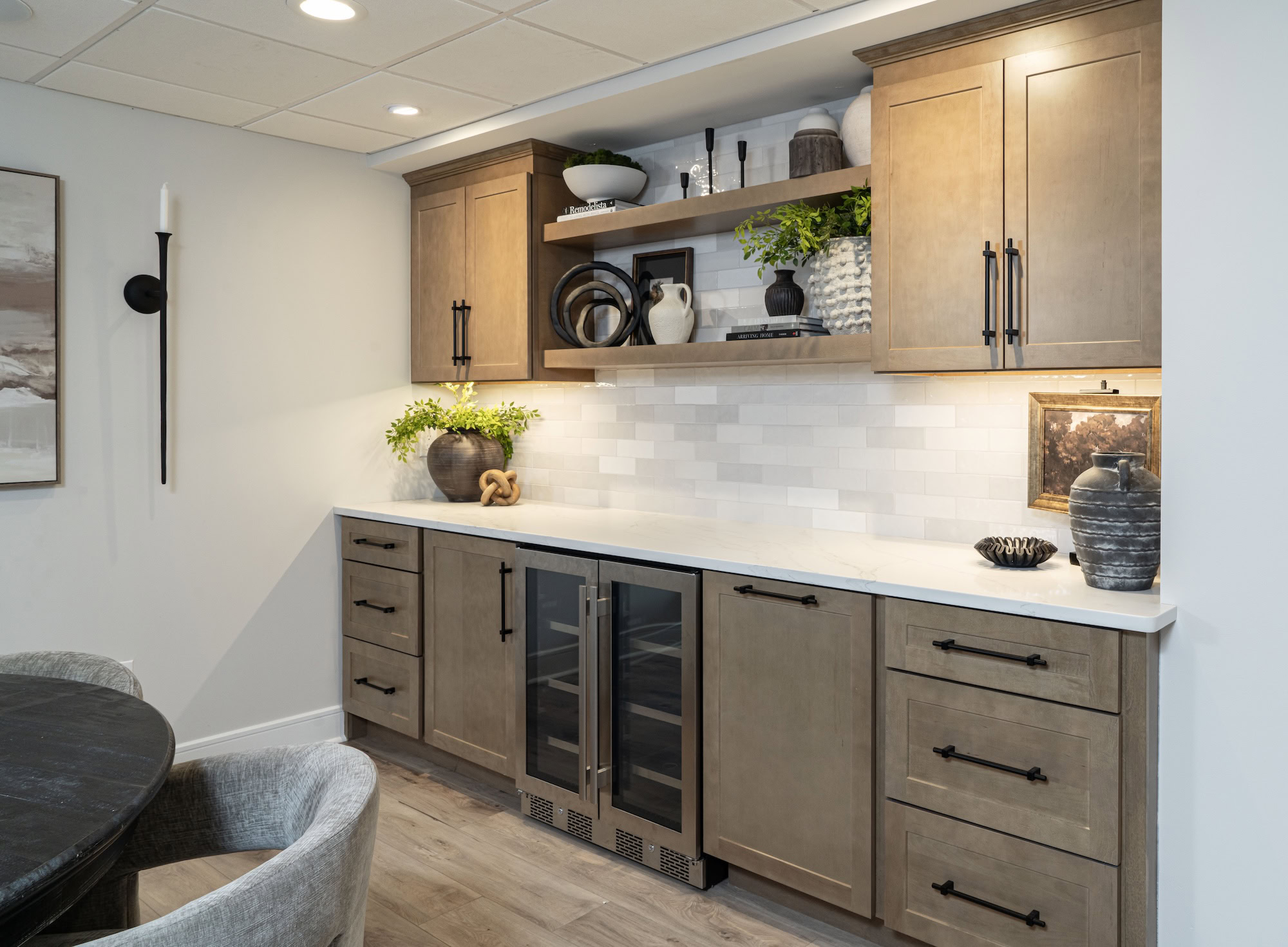
Tile can be a strong choice in basement bathrooms, around bars, or in targeted areas where water resistance and easy cleaning are priorities. It is durable, but it may feel colder and harder underfoot than other options in main living zones.
Rubber or specialty gym flooring
In workout areas, a resilient fitness floor may be more appropriate than standard finish flooring. The key is integrating it into the broader basement design so it does not feel disconnected from the rest of the space.
Flooring choices by basement use
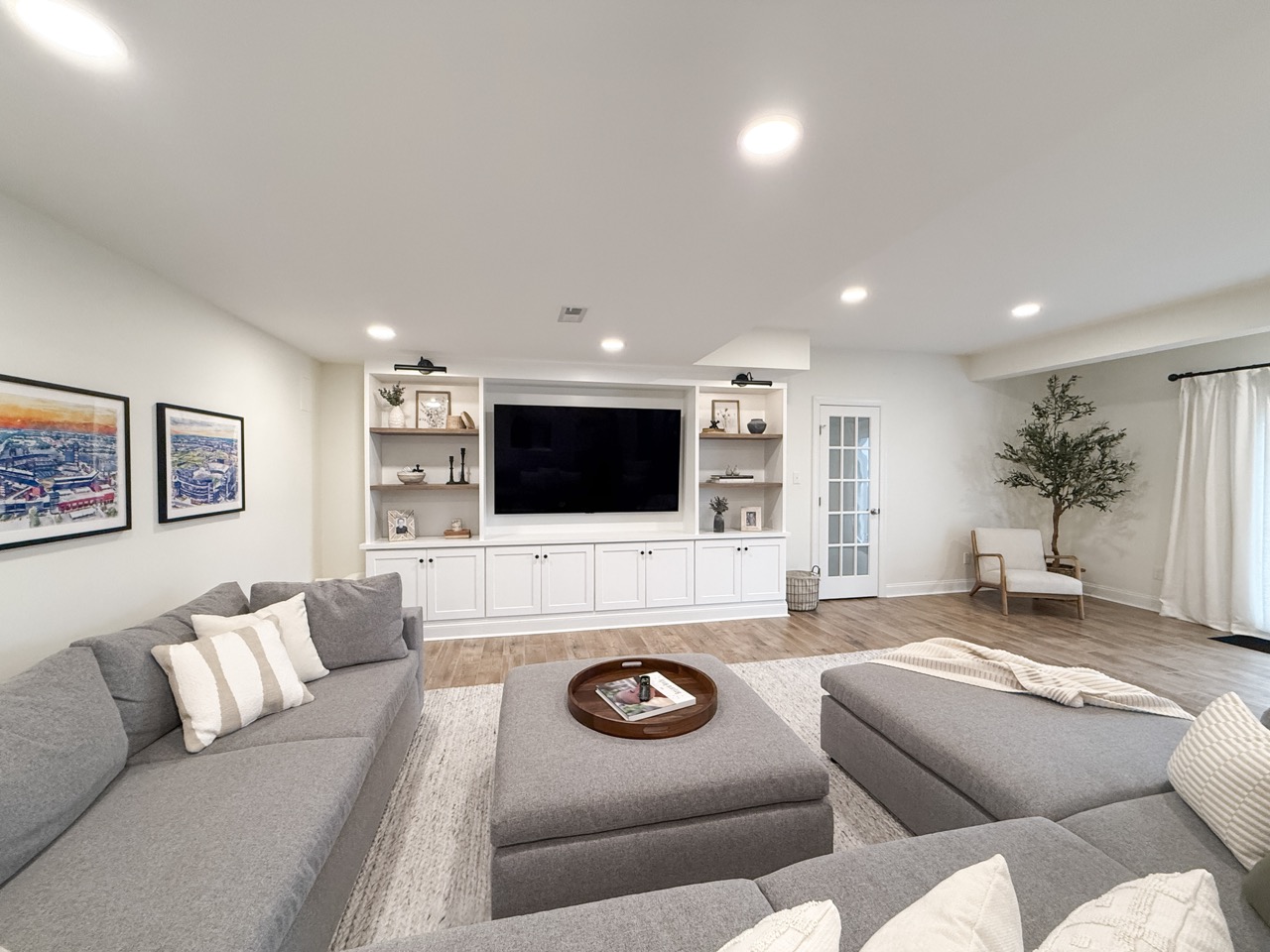
Best flooring for a basement family room LVP is often the strongest all-around option because it is durable, easy to maintain, and visually cohesive.
Best flooring for a basement gym
Rubber flooring or other impact-friendly surfaces may work best in the active zone, especially under heavier equipment.
Best flooring for a basement bathroom
Tile is a common choice because it handles moisture well and suits bathroom conditions.
Best flooring for a guest space
A combination of LVP with rugs or carpet in selected areas can provide a balance of comfort and practicality.
Why hardwood is usually not the first choice for basements
Engineered wood products can perform better than solid hardwood in some cases, but true hardwood is usually not the first recommendation for below-grade spaces because moisture movement and temperature changes can affect long-term performance. For homeowners who want the look of wood, LVP often delivers a more practical solution.
Basement flooring and moisture planning go together
Flooring should never be selected before the basement is evaluated for moisture conditions. Exterior drainage, humidity control, crack repair, insulation approach, and overall waterproofing strategy all affect how well the flooring will perform. That is why KPS emphasizes moisture assessment before finishing. Flooring is only one layer of the system.
Real project inspiration from KPS basements
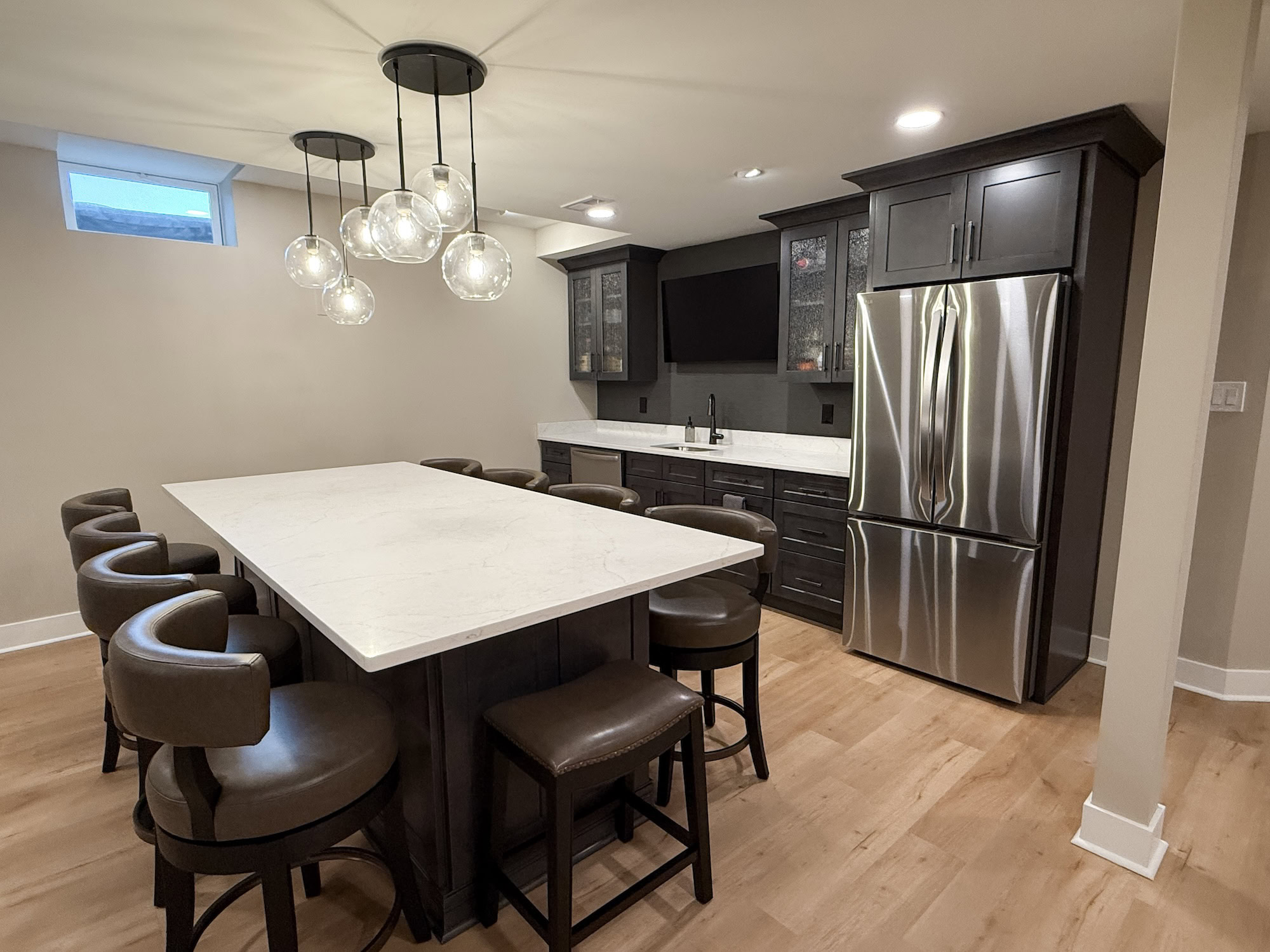
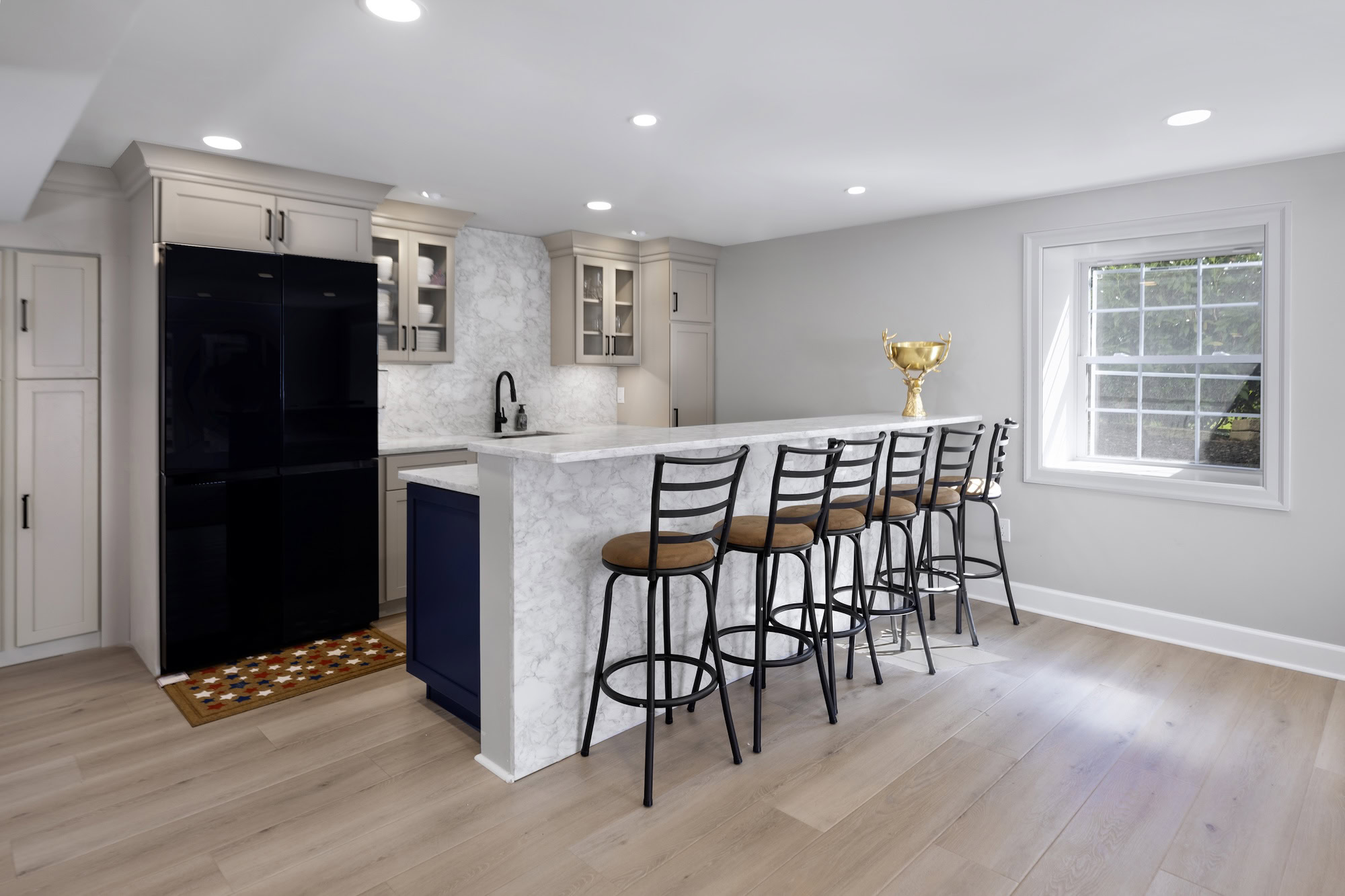
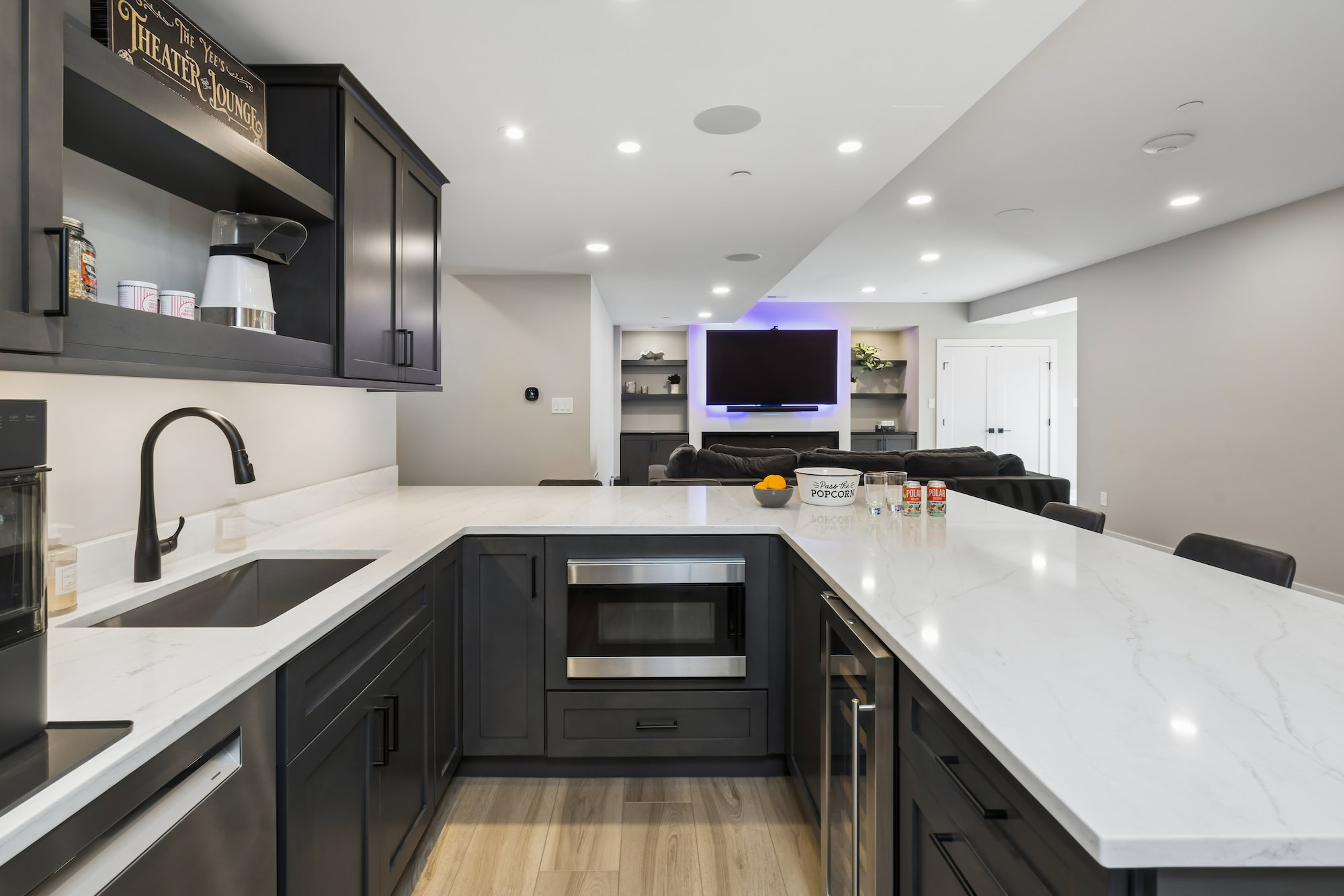
The Schwenksville Walk-Out Basement Remodel uses luxury vinyl plank flooring as part of a bright, modern layout designed for entertaining and flexible use. The Chester Springs Walkout Basement and Contemporary Timeless Basement also show how durable flooring can support multi-use basement environments that include baths, bars, fitness, and media functions. These projects reinforce how important it is for the flooring to feel consistent with the rest of the design while still performing in a below-grade setting.
Common basement flooring mistakes
Choosing based on appearance only
A product that looks great in a showroom may not be the best fit for a basement.
Ignoring comfort underfoot
Especially in family rooms and guest spaces, a floor that feels too hard or cold can affect how often the basement is actually used.
Skipping moisture evaluation first
Even high-performing materials can fail if the basement conditions are not addressed before installation.
Mixing too many flooring types
Too many transitions can make a basement feel busy and segmented. A more consistent flooring plan usually helps the space feel larger and more cohesive.
FAQs
Is luxury vinyl plank good for a basement?
Yes. It is one of the most common basement flooring choices because it is durable, moisture-conscious, and visually versatile.
Can you put carpet in a basement?
Yes, but it is best used thoughtfully and only after the basement has been evaluated for moisture and humidity.
Is tile good for a basement floor?
Tile can work well in bathrooms and certain utility or bar areas, though it may feel colder in main living spaces.
Should I avoid hardwood in a basement?
In many cases, yes. Solid hardwood is usually less practical for below-grade conditions than LVP or other moisture-conscious options.
What flooring is best for a basement gym? Rubber or specialty resilient flooring is often best in dedicated workout zones, especially beneath heavy equipment.
Basement Flooring Options for Pennsylvania Basements
The best basement flooring for Pennsylvania homes needs to balance durability, moisture performance, comfort, and design. For many finished basements, luxury vinyl plank is the strongest overall choice, but the right solution depends on how the space will be used and whether the basement has been prepared properly first. A good flooring decision supports the entire basement, not just the final look.
If you are planning a basement remodel and want help choosing materials that will hold up long term, learn more about Basement Finishing or explore Our Projects for real-world inspiration.