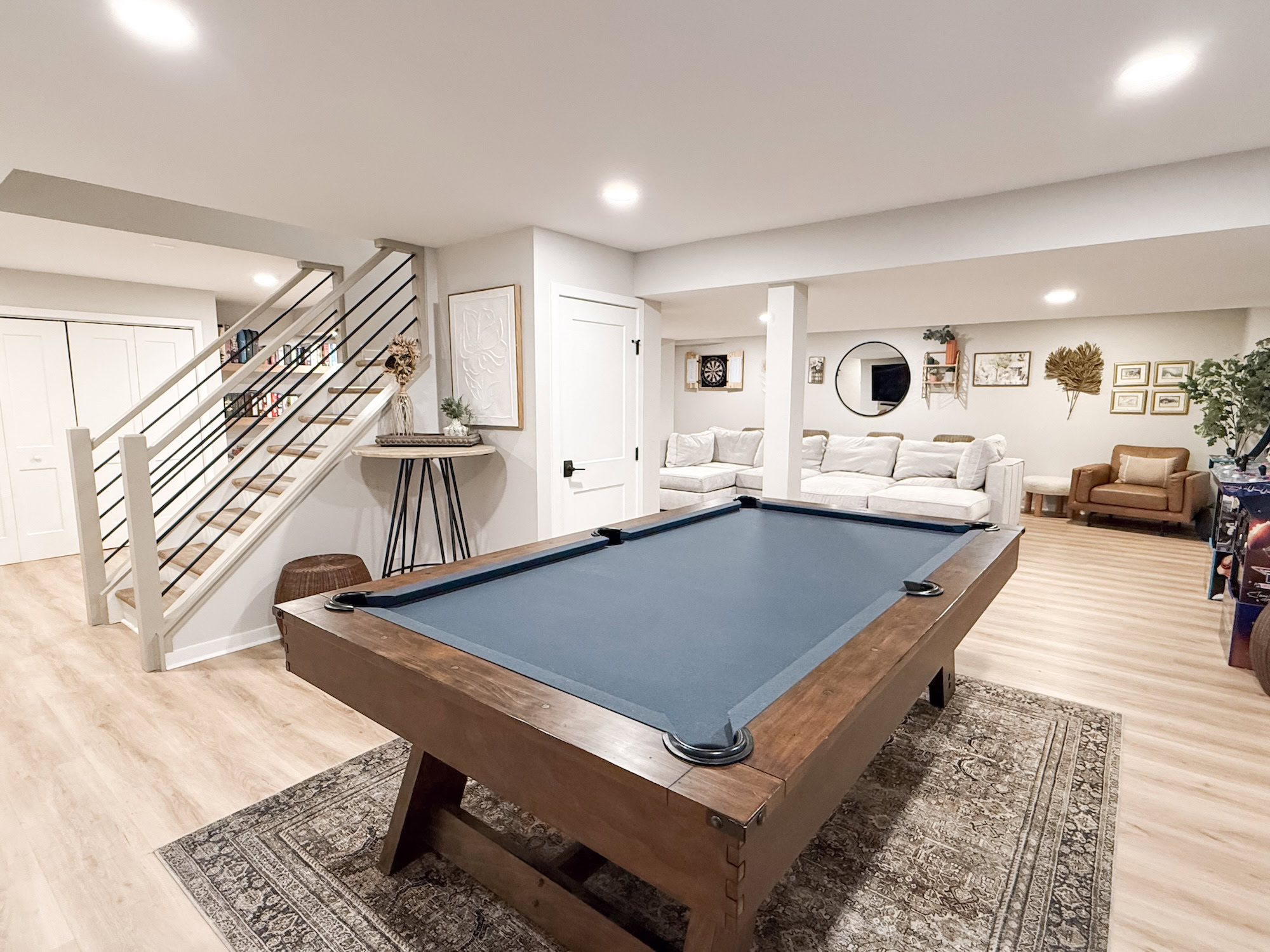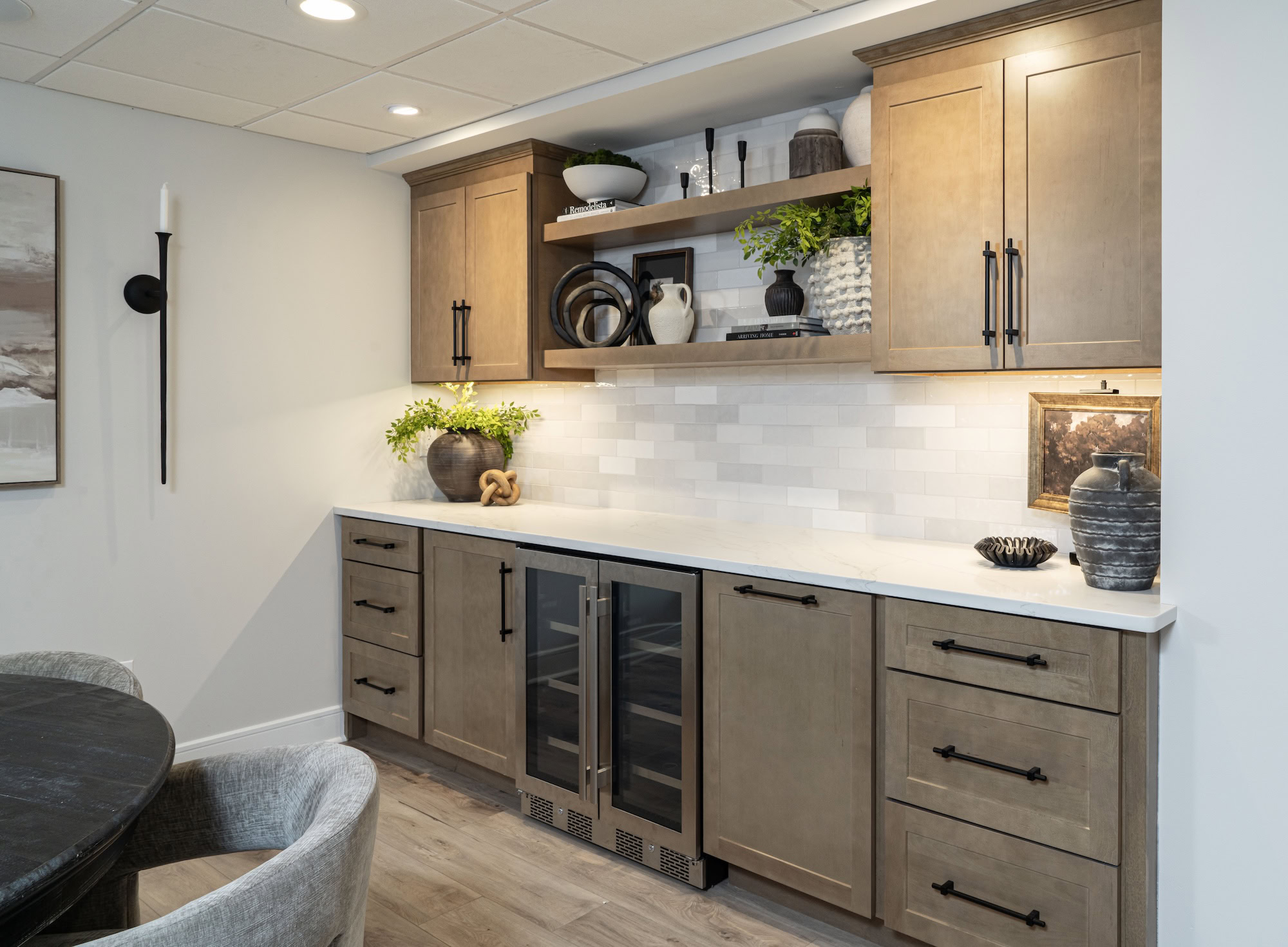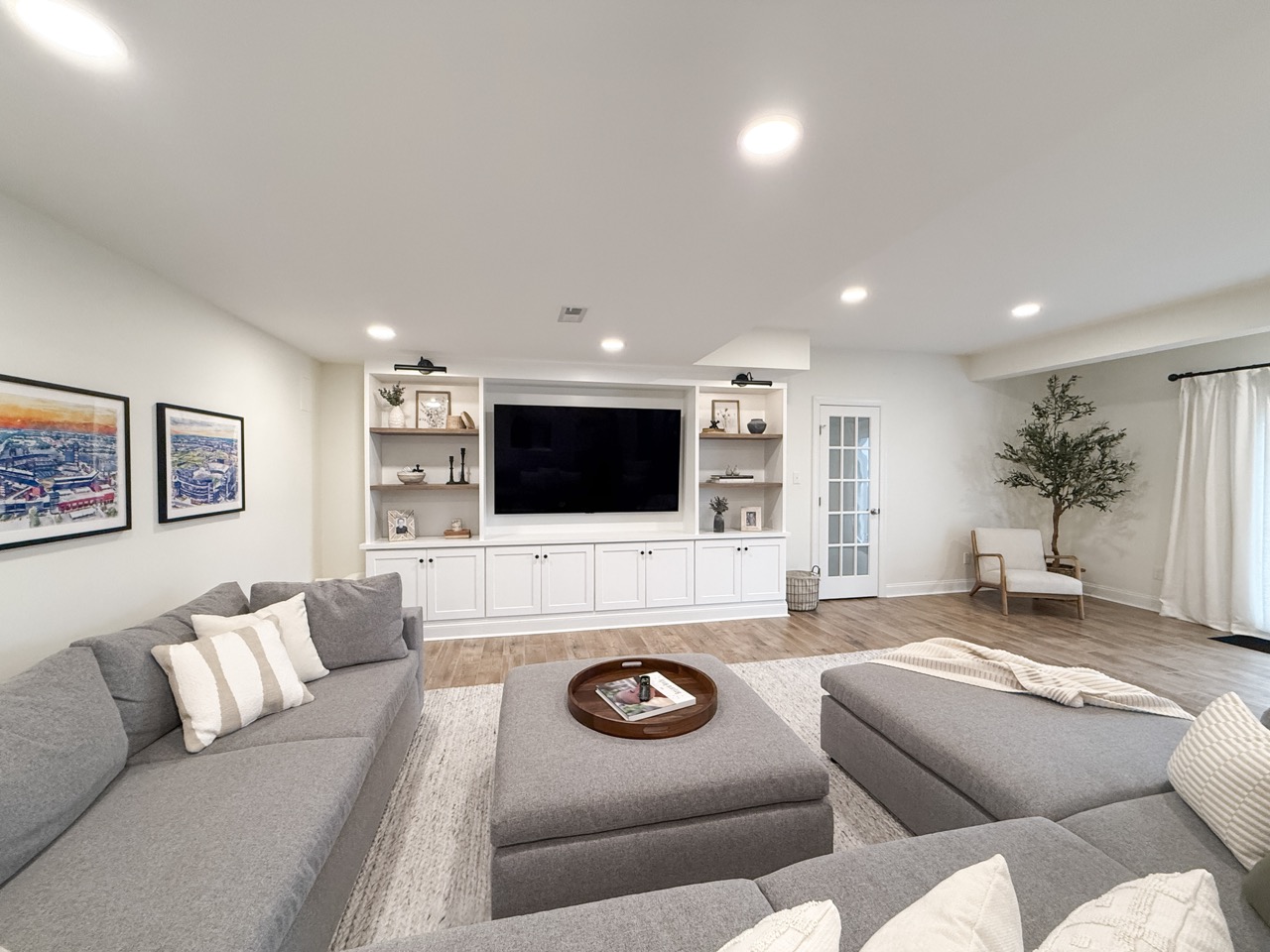

One of the most common basement design decisions is whether to create a flexible family room or a more dedicated home theater. Both can work well in a finished basement, but they solve different problems. The right choice depends on how your household lives, how often you entertain, and whether you want the basement to support one primary use or several.
A basement family room usually prioritizes flexibility. It is designed for everyday use, casual gatherings, kids’ activities, sports, gaming, and movie nights without making the room feel too specialized.
A basement home theater, on the other hand, is more focused. It is built around screen placement, acoustics, lighting control, seating orientation, and a more immersive viewing experience.
For many Pennsylvania homeowners, the real decision is not just about style. It is about function, budget, and long-term value. A basement should fit the household now, but it should also remain useful over time.
Is a basement family room or home theater better?
A basement family room is usually the better choice for homeowners who want flexible daily use, while a home theater is better for households that prioritize a dedicated viewing experience and are comfortable designing the space around that primary purpose. That is the short answer, but there are important tradeoffs to consider.
What is a basement family room?
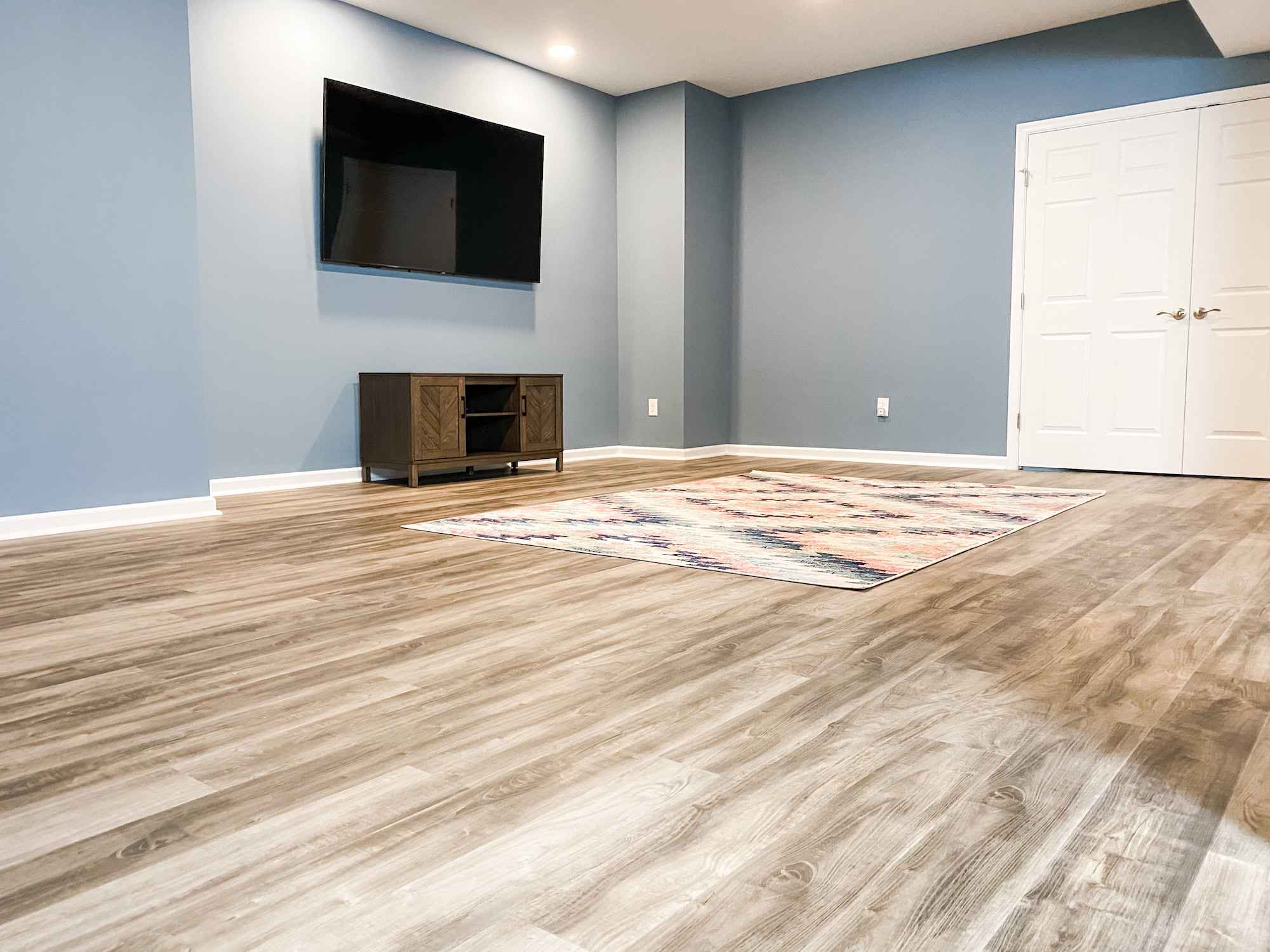
A basement family room is a flexible lounge and gathering space designed for everyday use. It may include a sectional, media wall, built-ins, a game area, a wet bar, or nearby play space, but it is not solely organized around theater-style viewing. This kind of room tends to work well for homeowners who want the basement to support multiple functions over time.
What is a basement home theater?
A basement home theater is a more dedicated entertainment room designed around screen visibility, seating layout, speaker placement, lighting control, and often sound isolation. It may include projector equipment, specialized wall treatments, or a more enclosed room configuration. It works best for homeowners who truly want an immersive viewing environment rather than a general living area with a TV.
Why a family room works well in many basements
A family room can support movie nights, sports, casual entertaining, gaming, homework, or simply giving the household another place to gather.
It often integrates better with other basement features Family rooms pair naturally with wet bars, play zones, home gyms, offices, and guest spaces.
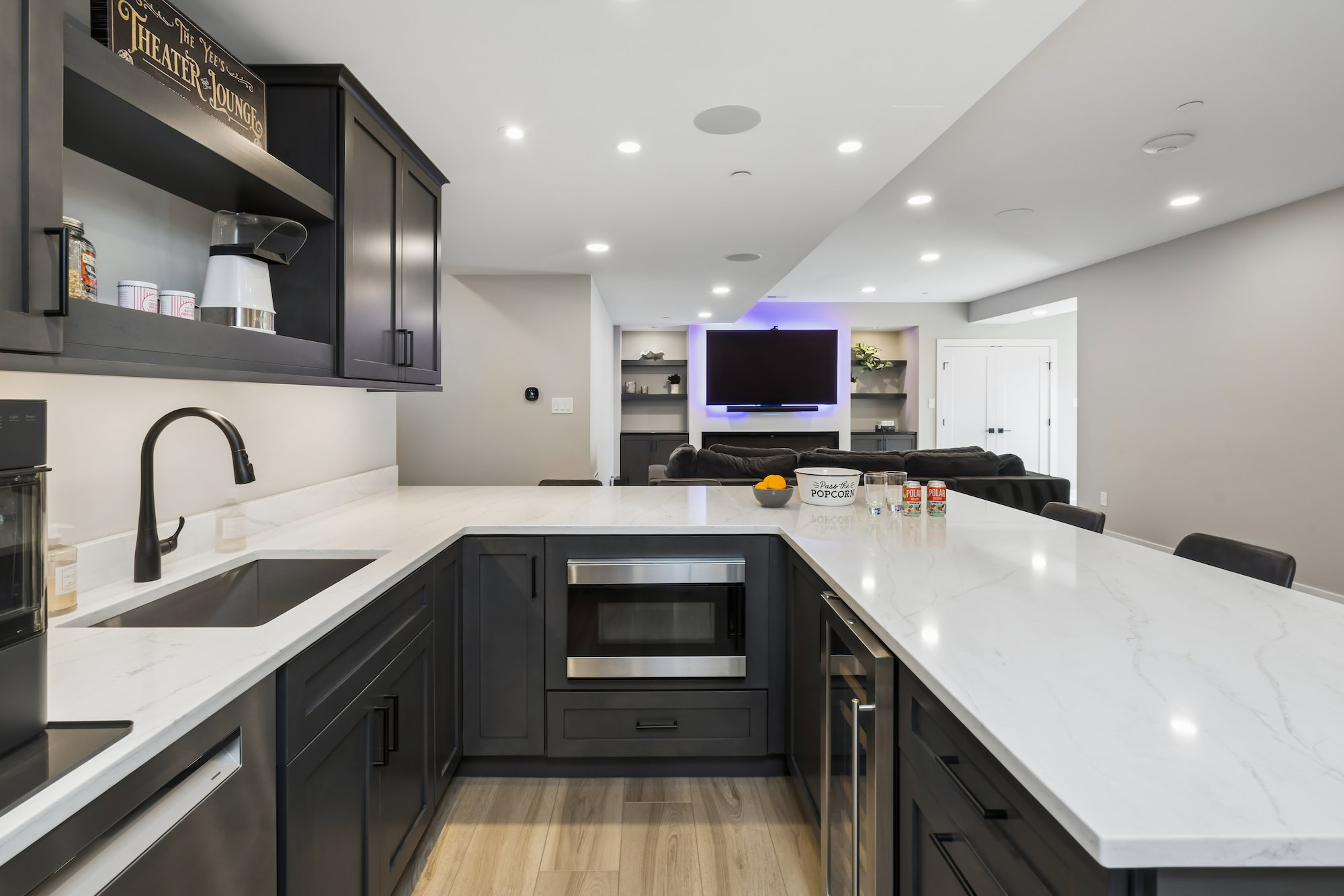
It appeals to more households If resale value is part of the decision, a flexible basement living area may appeal to a wider range of future buyers than a highly specialized theater. The Entertainment-Ready Collegeville Basement is a strong example of a basement designed around flexible entertaining rather than one narrow use. Its media wall and open layout make it practical for gatherings, movies, and everyday comfort.
Why a home theater may be the right choice
You want an immersive experience
If your household cares deeply about movie sound, darkness control, and screen-focused viewing, a dedicated theater may be worth it.
You are comfortable giving the room one clear purpose
A true theater usually gives up some flexibility in exchange for better performance.
You want sound isolation and controlled lighting
Basements are naturally well suited to theater environments because they are already more enclosed and less dependent on natural light.
Design considerations for each option
Layout
Family rooms are usually more open and can support multiple seating arrangements. Home theaters are more linear, with furniture positioned around screen viewing.
Lighting
Family rooms benefit from layered lighting that supports both daily use and movie watching. Home theaters need stronger light control and often dimmable or low-profile fixtures.
Acoustics
A theater deserves more sound planning, especially if you want to reduce noise transfer to the upper floors. Family rooms can still benefit from sound-dampening strategies, especially if the basement also includes a gym or play zone.
Built-ins and storage
Family rooms often include more visible built-ins for games, décor, or media equipment. Theaters may keep equipment more concealed.
Which option works better in Pennsylvania basements?
In many Pennsylvania homes, a family room is the more practical investment because it supports more day-to-day use and adapts more easily as the household changes. That said, certain basements are excellent candidates for theater-style spaces, especially when the homeowners already know the basement will be a dedicated entertainment destination.
Projects like the Golf Simulator Basement show how specialized entertainment can work extremely well when the design is intentionally built around the homeowners’ lifestyle. The key is not following a trend. It is matching the basement to how the space will actually be used.
Hybrid approach: The best of both worlds
For many homeowners, the smartest answer is not choosing one extreme. It is designing a family room with theater-friendly features. That might include:
- A strong media wall
- Better sound insulation
- Dimmable lighting
- Comfortable sectional seating
- Strategic speaker planning
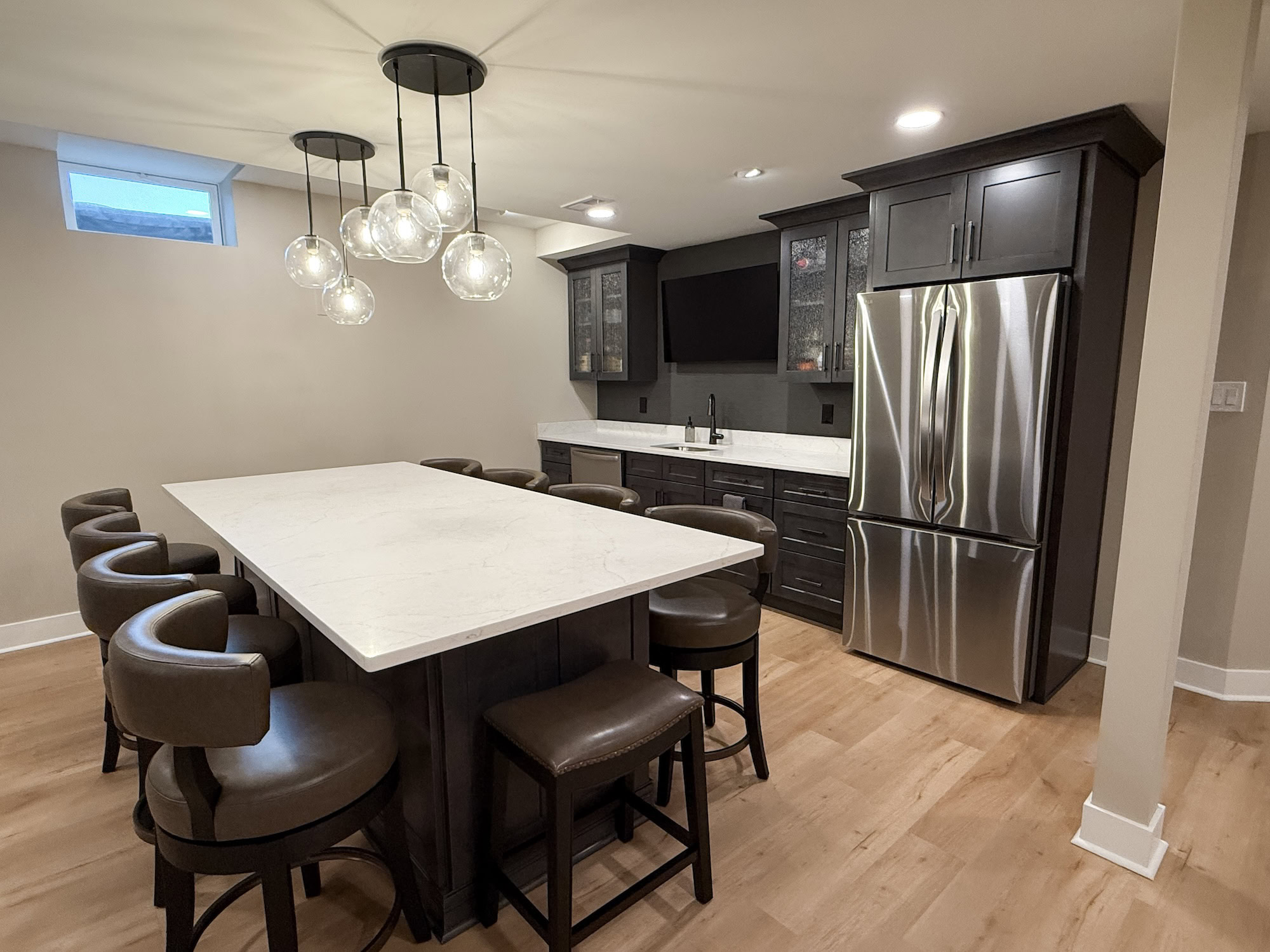
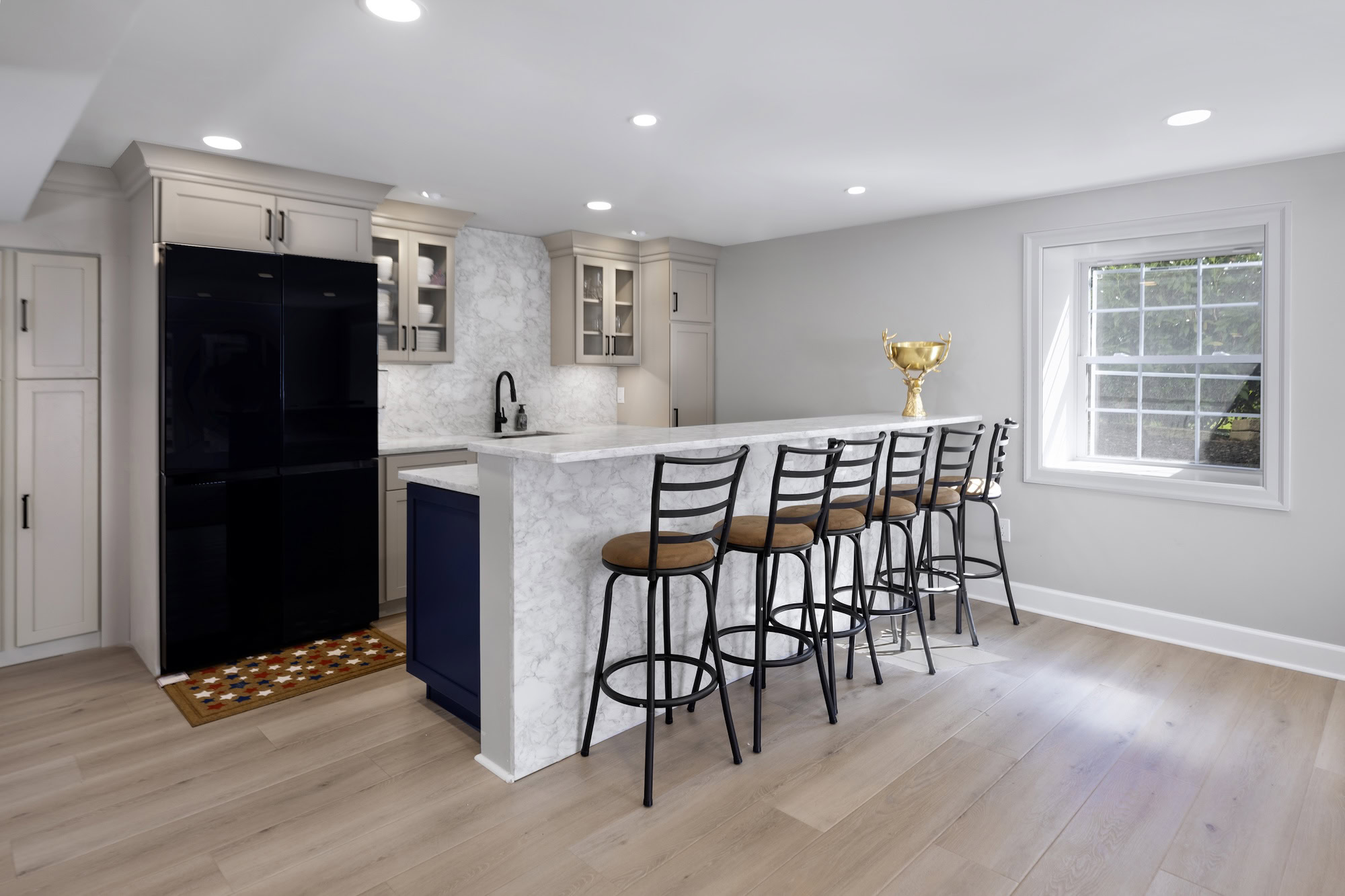
- A nearby beverage station or bar
This keeps the basement versatile while still improving the viewing experience.
FAQs
Is a home theater worth it in a basement?
It can be, especially for homeowners who prioritize movies, sports, and immersive entertainment. It works best when the room is intentionally designed for that use.
Is a family room better for resale?
Often yes, because it is more flexible and appeals to a broader range of buyers.
Can a basement family room still feel like a theater?
Yes. Many family rooms include media walls, upgraded sound, and lighting control without becoming a fully dedicated theater.
Does a home theater need soundproofing?
It is usually a smart investment, especially if you want to reduce sound transfer to the main floor.
Can one basement include both a family room and theater zone?
In larger basements, yes. In smaller ones, a hybrid family room approach is often more practical.
Let’s Get Started
The choice between a basement family room and a basement home theater comes down to flexibility versus specialization. Family rooms work well for everyday living and changing household needs, while home theaters are best for homeowners who want a dedicated entertainment environment. In many Pennsylvania basements, the strongest solution is a well-designed family room with theater-friendly features that keeps the space useful for years.
If you are deciding how to use your finished basement, explore Our Projects or learn more about Basement Finishing. KPS helps homeowners design spaces that fit the way they really live, not just the latest trend.